Buy vbv.be ?
We are moving the project
vbv.be .
Are you interested in purchasing the domain
vbv.be ?
domain@kv-gmbh.de · 0541-91531010
Buy vbv.be ?
Have our exoplanets already been studied?
Yes, exoplanets have been extensively studied by astronomers using various methods such as transit photometry, radial velocity measurements, and direct imaging. These studies have provided valuable insights into the characteristics of exoplanets, such as their size, composition, and orbit. Additionally, ongoing and future missions, such as the James Webb Space Telescope, will continue to expand our knowledge of exoplanets and their potential for hosting life. **
Have our exoplanets already been examined?
Yes, exoplanets have been examined by astronomers using various methods such as the transit method, radial velocity method, and direct imaging. These methods have allowed scientists to gather information about the size, composition, atmosphere, and potential habitability of exoplanets. Additionally, ongoing and future missions, such as the James Webb Space Telescope, will continue to study exoplanets in more detail. **

Similar search terms for Exoplanets
Top-Angebote
Products related to Exoplanets:
-
Hawaiian Tropic Glowing Protection ensembleHawaiian Tropic Glowing Protection, 1 pcs, Protection contre le rayonnement solaire pour femme, Découvrez un coffret pratique de produits qui embelliront votre quotidien. Le coffret Hawaiian Tropic Glowing Protection facilite votre choix, en proposant une sélection de vos articles préférés, désormais réunis dans un seul et même emballage. L'ensemble contient: Hawaiian Tropic Glowing Protection Face Cream crème solaire visage SPF 50 50.00 ml Hawaiian Tropic Glowing Protection Sunscreen Lotion lait solaire SPF 50 170.00 ml Le produit : protège la peau contre le vieillissement prématuré peut être utilisé sur le corps et le visage masque les imperfections de la peau protège contre les rayons UV nourrit la peau apaise et adoucit la peau hydrate et nourrit Composition du produit : beurre de karité – nourrit, aide à retenir l'humidité, apporte douceur et souplesse, offre une protection contre le dessèchement et les agressions extérieures SPF : protège contre les effets néfastes des rayons UV vitamine E : nourrit la peau, lui procure une protection antioxydante contre le vieillissement prématuré et les dommages causés par les radicaux libres, contribue à lisser les rides et à rendre la peau plus ferme et plus souple Mode d’emploi : Suivez les instructions indiquées sur l’emballage.28,10 €*Shipping: 3,45 €Secure redirect to the provider


-
Have our exoplanets already been investigated?
Yes, exoplanets have been extensively investigated by astronomers using various methods such as the transit method, radial velocity method, and direct imaging. These investigations have revealed a wide range of exoplanets with different sizes, compositions, and orbital characteristics. Scientists continue to study exoplanets to better understand their formation, evolution, and potential for hosting life. **
-
Why do exoplanets not have names yet?
Exoplanets do not have official names yet because the International Astronomical Union (IAU) is responsible for naming celestial bodies, and they have not yet established a formal naming process for exoplanets. Additionally, there are thousands of exoplanets that have been discovered, and it would be a complex and time-consuming task to come up with unique and meaningful names for each one. For now, exoplanets are typically referred to by a combination of letters and numbers based on the star they orbit, such as "Kepler-186f" or "TRAPPIST-1e." **
-
How do people travel to other exoplanets?
Currently, people do not travel to other exoplanets. The distances to exoplanets are so vast that it would take thousands of years using current technology to reach even the closest ones. Additionally, we have not yet developed the technology to sustain human life for such long journeys. However, there is ongoing research and development into advanced propulsion systems, life support systems, and spacecraft design that may one day make interstellar travel a possibility. **
-
Have moons of exoplanets ever been discovered?
Yes, moons of exoplanets have been discovered. One example is the exomoon candidate Kepler-1625b I, which was detected in 2018 using data from the Kepler Space Telescope. This discovery suggests that exomoons may be more common than previously thought, and it opens up the possibility of finding even more moons around exoplanets in the future. The study of exomoons is an exciting area of research that could provide valuable insights into the formation and evolution of planetary systems beyond our own. **


Why is the question about exoplanets so interesting?
The question about exoplanets is so interesting because it has the potential to expand our understanding of the universe and our place within it. Discovering and studying exoplanets can provide insights into the formation and evolution of planetary systems, as well as the potential for life beyond Earth. Additionally, the search for exoplanets pushes the boundaries of technology and observational techniques, driving advancements in astronomy and space exploration. Ultimately, the study of exoplanets has the potential to answer fundamental questions about the nature of the cosmos and our place in it. **
Can the James Webb Telescope take pictures of exoplanets?
Yes, the James Webb Telescope has the capability to take pictures of exoplanets. It is equipped with a specialized instrument called the Near Infrared Camera (NIRCam) that is designed to capture images of distant planets orbiting other stars. By using its advanced technology and positioning, the telescope will be able to observe and photograph exoplanets, providing valuable insights into their atmospheres and potential habitability. **
Top-Angebote
Products related to Exoplanets:
-
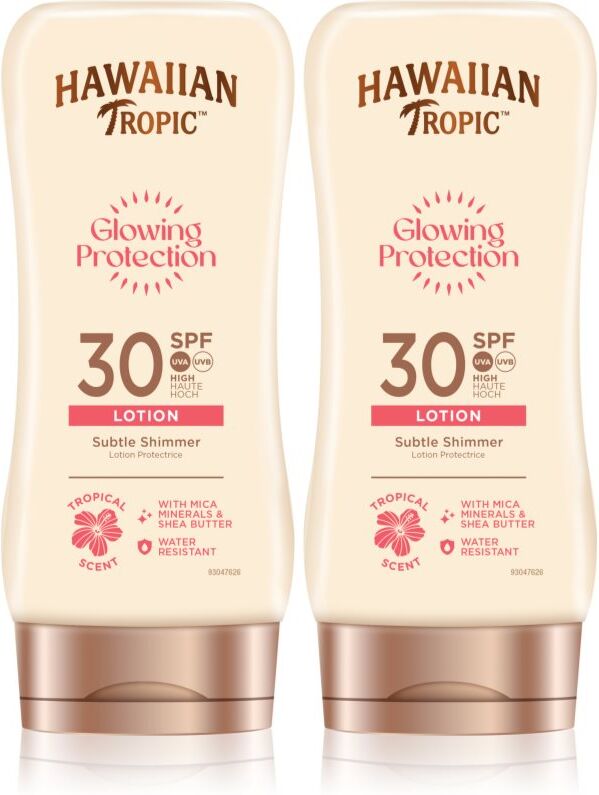
Hawaiian Tropic Glowing Protection Glowin Protection ensembleHawaiian Tropic Glowing Protection Glowin Protection, 1 pcs, Protection contre le rayonnement solaire pour femme, Découvrez un coffret pratique de produits qui embelliront votre quotidien. Le coffret Hawaiian Tropic Glowing Protection Glowin Protection facilite votre choix, en proposant une sélection de vos articles préférés, désormais réunis dans un seul et même emballage. L'ensemble contient: Hawaiian Tropic Glowing Protection Sunscreen Lotion lait solaire SPF 30 2x170.00 ml Le produit : coffret à un prix avantageux apporte à la peau l’hydratation dont elle a besoin évite les réactions allergiques au soleil agit préventivement contre le vieillissement de la peau nourrit la peau et en prend soin Composition du produit : beurre de karité – nourrit, aide à retenir l'humidité, apporte douceur et souplesse, offre une protection contre le dessèchement et les agressions extérieures vitamine E : nourrit la peau, lui procure une protection antioxydante contre le vieillissement prématuré et les dommages causés par les radicaux libres, contribue à lisser les rides et à rendre la peau plus ferme et plus souple Mode d’emploi : Suivez les instructions indiquées sur l’emballage.28,10 €*Shipping: 3,45 €Secure redirect to the provider
-
Listerine Professional Gum Protection+ bain de bouche protection dents et gencives 500 mlListerine Professional Gum Protection+, 500 ml, Bains de bouche pour femme, Le bain de bouche Listerine Professional Gum Protection+ ne vous aide pas uniquement à rafraichir votre haleine, il agit également contre la plaque dentaire et aide à maintenir une bonne hygiène de la gencive et des dents. Le produit : maintient des gencives saines tue les bactéries lutte contre l’apparition de caries dentaires renforce l’émail protection contre la plaque dentaire Composition du produit : sans alcool Mode d’emploi : Après le brossage des dents, rincez la bouche avec le bain de bouche pendant la durée indiquée sur l’emballage, rincez ensuite.12,90 €*Shipping: 3,45 €Secure redirect to the provider
-
Have our exoplanets already been studied?
Yes, exoplanets have been extensively studied by astronomers using various methods such as transit photometry, radial velocity measurements, and direct imaging. These studies have provided valuable insights into the characteristics of exoplanets, such as their size, composition, and orbit. Additionally, ongoing and future missions, such as the James Webb Space Telescope, will continue to expand our knowledge of exoplanets and their potential for hosting life. **
-
Have our exoplanets already been examined?
Yes, exoplanets have been examined by astronomers using various methods such as the transit method, radial velocity method, and direct imaging. These methods have allowed scientists to gather information about the size, composition, atmosphere, and potential habitability of exoplanets. Additionally, ongoing and future missions, such as the James Webb Space Telescope, will continue to study exoplanets in more detail. **
-
Have our exoplanets already been investigated?
Yes, exoplanets have been extensively investigated by astronomers using various methods such as the transit method, radial velocity method, and direct imaging. These investigations have revealed a wide range of exoplanets with different sizes, compositions, and orbital characteristics. Scientists continue to study exoplanets to better understand their formation, evolution, and potential for hosting life. **
-
Why do exoplanets not have names yet?
Exoplanets do not have official names yet because the International Astronomical Union (IAU) is responsible for naming celestial bodies, and they have not yet established a formal naming process for exoplanets. Additionally, there are thousands of exoplanets that have been discovered, and it would be a complex and time-consuming task to come up with unique and meaningful names for each one. For now, exoplanets are typically referred to by a combination of letters and numbers based on the star they orbit, such as "Kepler-186f" or "TRAPPIST-1e." **
Similar search terms for Exoplanets
-
Hawaiian Tropic Glowing Protection ensembleHawaiian Tropic Glowing Protection, 1 pcs, Protection contre le rayonnement solaire pour femme, Découvrez un coffret pratique de produits qui embelliront votre quotidien. Le coffret Hawaiian Tropic Glowing Protection facilite votre choix, en proposant une sélection de vos articles préférés, désormais réunis dans un seul et même emballage. L'ensemble contient: Hawaiian Tropic Glowing Protection Face Cream crème solaire visage SPF 50 50.00 ml Hawaiian Tropic Glowing Protection Sunscreen Lotion lait solaire SPF 50 170.00 ml Le produit : protège la peau contre le vieillissement prématuré peut être utilisé sur le corps et le visage masque les imperfections de la peau protège contre les rayons UV nourrit la peau apaise et adoucit la peau hydrate et nourrit Composition du produit : beurre de karité – nourrit, aide à retenir l'humidité, apporte douceur et souplesse, offre une protection contre le dessèchement et les agressions extérieures SPF : protège contre les effets néfastes des rayons UV vitamine E : nourrit la peau, lui procure une protection antioxydante contre le vieillissement prématuré et les dommages causés par les radicaux libres, contribue à lisser les rides et à rendre la peau plus ferme et plus souple Mode d’emploi : Suivez les instructions indiquées sur l’emballage.28,10 €*Shipping: 3,45 €Secure redirect to the provider
-
Rexona Active Protection+ Fresh ensembleRexona Active Protection+ Fresh, 1 pcs, Antitranspirants pour femme, Découvrez un coffret pratique de produits qui embelliront votre quotidien. Le coffret Rexona Active Protection+ Fresh facilite votre choix, en proposant une sélection de vos articles préférés, désormais réunis dans un seul et même emballage. L'ensemble contient: Rexona Active Shield Fresh anti-transpirant spray 3x150.00 ml Le produit : protège efficacement contre la transpiration protège contre les mauvaises odeurs laisse une sensation de fraîcheur qui dure ne bloque pas les processus naturels du corps offre une sensation de confort et de propreté qui perdure garantit une absorption optimale de la transpiration Composition du produit : sans alcool Mode d’emploi : Suivez les instructions indiquées sur l’emballage. Appliquez sur des aisselles propres et sèches. Laissez sécher complètement avant de vous habiller. Répétez à tout moment de la journée.11,00 €*Shipping: 3,45 €Secure redirect to the provider
-
How do people travel to other exoplanets?
Currently, people do not travel to other exoplanets. The distances to exoplanets are so vast that it would take thousands of years using current technology to reach even the closest ones. Additionally, we have not yet developed the technology to sustain human life for such long journeys. However, there is ongoing research and development into advanced propulsion systems, life support systems, and spacecraft design that may one day make interstellar travel a possibility. **
-
Have moons of exoplanets ever been discovered?
Yes, moons of exoplanets have been discovered. One example is the exomoon candidate Kepler-1625b I, which was detected in 2018 using data from the Kepler Space Telescope. This discovery suggests that exomoons may be more common than previously thought, and it opens up the possibility of finding even more moons around exoplanets in the future. The study of exomoons is an exciting area of research that could provide valuable insights into the formation and evolution of planetary systems beyond our own. **
-
Why is the question about exoplanets so interesting?
The question about exoplanets is so interesting because it has the potential to expand our understanding of the universe and our place within it. Discovering and studying exoplanets can provide insights into the formation and evolution of planetary systems, as well as the potential for life beyond Earth. Additionally, the search for exoplanets pushes the boundaries of technology and observational techniques, driving advancements in astronomy and space exploration. Ultimately, the study of exoplanets has the potential to answer fundamental questions about the nature of the cosmos and our place in it. **
-
Can the James Webb Telescope take pictures of exoplanets?
Yes, the James Webb Telescope has the capability to take pictures of exoplanets. It is equipped with a specialized instrument called the Near Infrared Camera (NIRCam) that is designed to capture images of distant planets orbiting other stars. By using its advanced technology and positioning, the telescope will be able to observe and photograph exoplanets, providing valuable insights into their atmospheres and potential habitability. **
* All prices are inclusive of VAT and, if applicable, plus shipping costs. The offer information is based on the details provided by the respective shop and is updated through automated processes. Real-time updates do not occur, so deviations can occur in individual cases. ** Note: Parts of this content were created by AI.